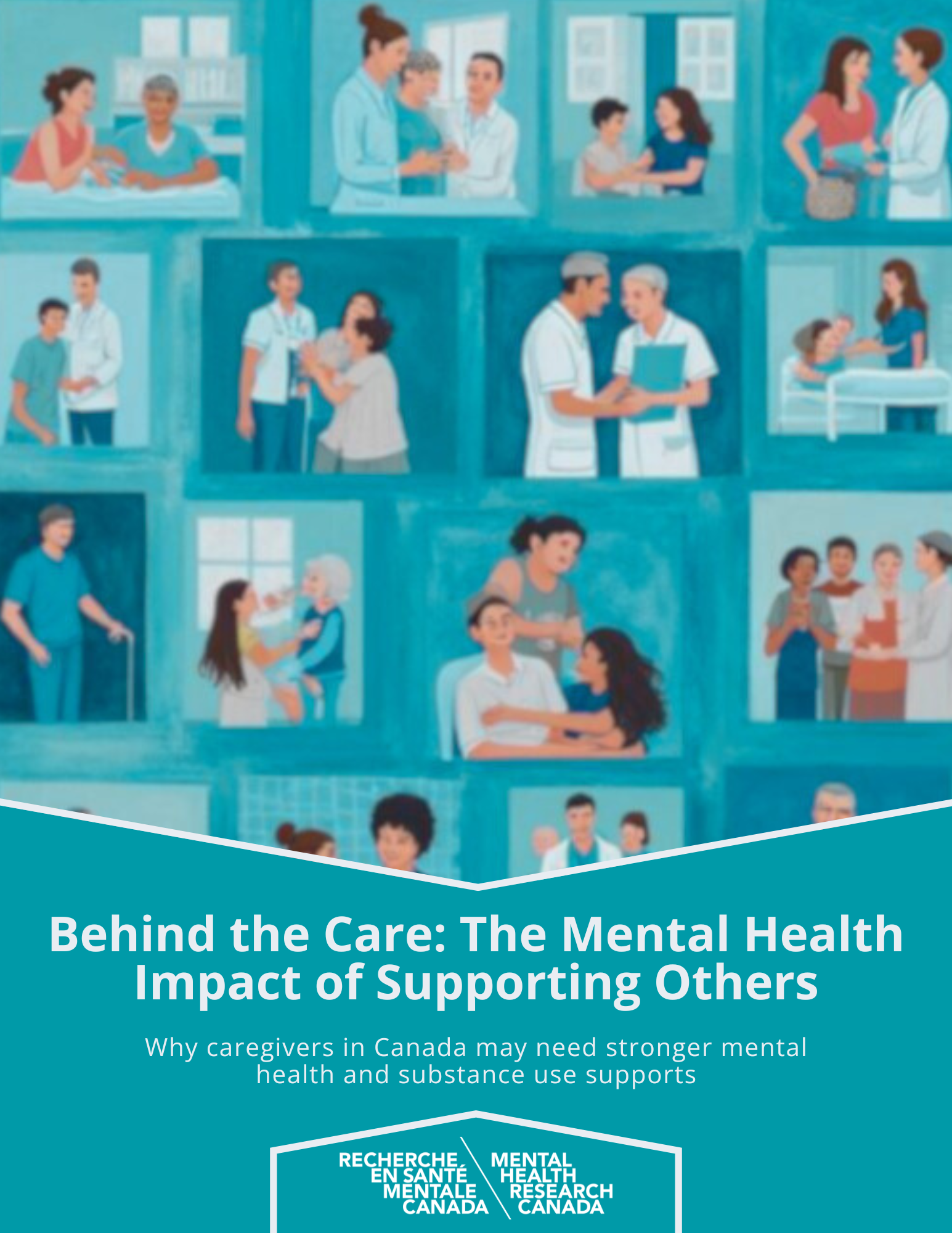
Behind the Care
The Mental Health Impact of Supporting Others
Key Findings
Caregiving, both paid or unpaid, is associated with increased risk of mental health and substance use challenges.
Both paid and unpaid caregivers were approximately 2 times as likely to experience moderate to severe symptoms of anxiety and depression, compared to people who aren’t caregivers.
Caregivers were more likely to report hazardous or harmful alcohol use, with the strongest patterns seen among paid caregivers.
Why This Matters
Caregivers make it possible for millions of Canadians to work, study, and participate fully in daily life. When caregivers struggle with their mental health or substance related harms, the ripple effects reach far beyond the home. Poor mental health, burnout, and substance‑related harms can make it harder for caregivers to not only perform their care duties, but to stay in the workforce and maintain financial stability.
These findings highlight the need for targeted supports and interventions to protect caregiver well-being.
Is there an association between caregiving burden, household structure, and Poor mental health Indicators?
Our newly released report offers a more comprehensive understanding of how household dynamics shape well-being and examines the relationship between informal caregiving responsibilities, mental health, and substance use.