Reports and findings
Mental health is shaped by a wide range of experiences, environments and pressures. Understanding how those factors are changing requires evidence that is current, relevant and grounded in the experiences of people in Canada.
We conduct and support research to better understand the state of mental health across the country, identify emerging challenges and explore the factors that influence how people cope, seek support and experience care. Our work ranges from ongoing national population polling to focused quantitative and qualitative research examining specific issues, populations and areas where deeper understanding is needed.
This collection brings together our reports, research briefs and findings, including work developed with research, community and sector partners. Together, they provide a growing picture of mental health in Canada, from broad national trends to more focused insights on access to care, workplace and youth mental health, emerging technologies, substance use, belonging and the experiences of communities whose needs may not always be visible in national averages.
Explore the latest findings below, or use the filters to find research by topic.

Behind the Care: The Mental Health Impact of Supporting Others
Caregivers provide essential support to people in Canada, but caregiving can bring significant pressures of its own. Our research finds that both paid and unpaid caregivers are more likely than non-caregivers to experience symptoms of anxiety and depression and to report hazardous or harmful alcohol and cannabis use.
Access to Mental Health Services by Funding Pathways
More than half of people who accessed mental health or substance use support used private services, while others relied on public, free or community-based options. This infographic shows how funding pathways shape where people turn and which providers they see.
Associations Between Social Media Use, Personal Screen Time, and Mental Health Indicators Among Canadian Youth
Youth report the highest screen time and social media use of any age group. Seven or more hours of personal screen time and cybervictimization are associated with anxiety, depression, psychological distress and suicidal ideation, while strong relationships and resilience are protective.


Is it Helping?: Satisfaction with Mental Health and Substance Use Services
Satisfaction with Mental Health and Substance Use Services
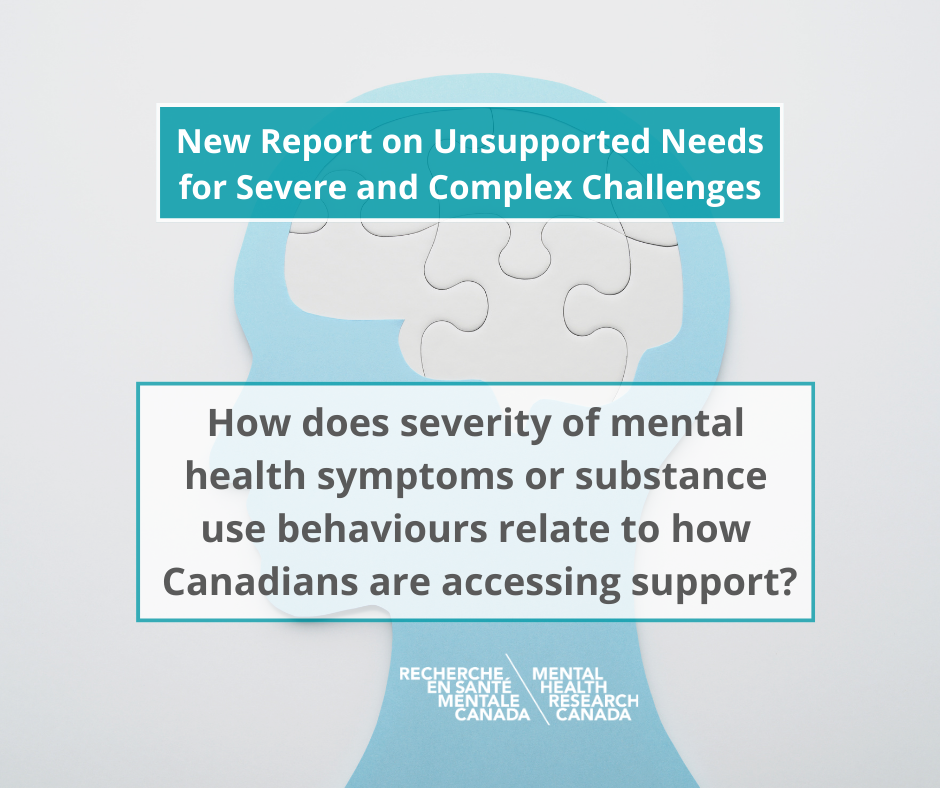
Access to Mental Health and Substance Use Services by Canadians with Severe and Complex Challenges
It all begins with an idea.

Beyond the Numbers: Amplifying Youth Voices in Navigating Mental Health in Canada
It all begins with an idea.

A Generation at Risk: The State of Youth Mental Health in Canada
It all begins with an idea.